Soil Diversity
Development and Classification
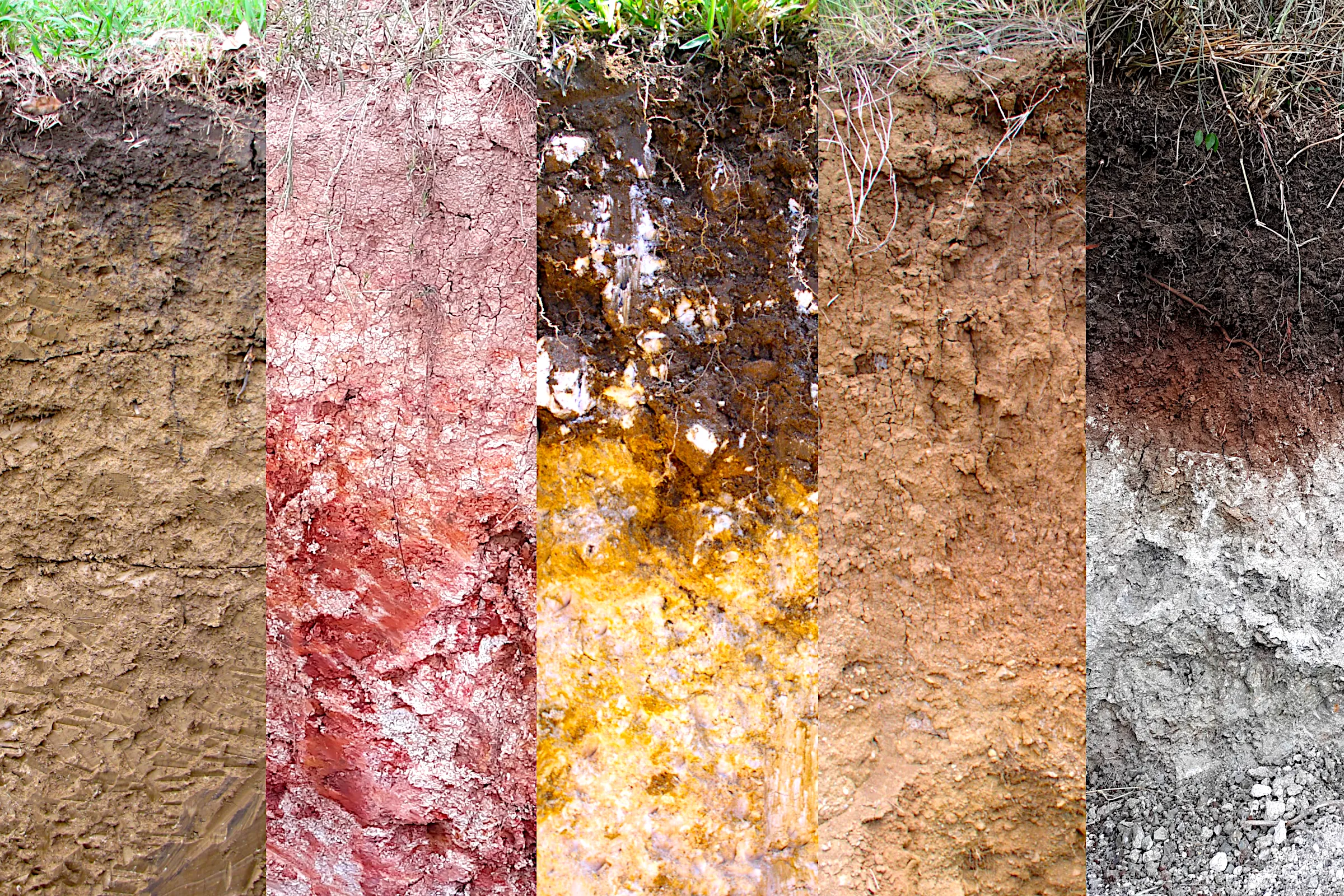
Did you know that not all soils are the same?
Each soil has particular characteristics that give them unique names. How interesting it is to call them by their name, isn't it? Other things that are also interesting to know is understanding how soils are generated, how many types of soils exist in Puerto Rico and the United States Virgin Islands, as well as how many similarities exist between soils in the Caribbean.
If you want to know the answers, join us on this journey of discovery!
The great diversity of soils is generated thanks to five factors that interact with each other: (1) the parent material (the bedrock or the deposited material underlying soil), (2) the climate (weather conditions that characterize a particular place), (3) the topography (relief or earth's surface), (4) the organisms (microorganisms, micro and macro fauna), and (5) time (years, decades, centuries) (Weil & Brady, 2017).
Parent material is the parent rock or the material on which the soil is formed. It is the factor that has the greatest influence on soil formation and determines its mineral composition. Soils can be formed from igneous, sedimentary, or metamorphic rocks. In the Caribbean we have examples of soils formed from these different types of parent materials. Climate is a soil-forming factor that influences the speed of soil formation. When we talk about climate, we take into consideration environmental conditions such as temperature, humidity and precipitation. Topography is the position of the soil relative to the slope and position to the sun. That is why we see very different soils north of the central mountain range of Puerto Rico, compared to those that form in the south. Organisms play a very important role in soil formation factors, contributing to soil organic matter, weathering and disintegration processes of parent material, and movement of material in the soil. Lastly, we have time, and soils require lots of time for their formation. It is estimated that on average it takes 2,000 years to form 10 cm of soil.
However, for soil-forming factors to interact with each other, it is important that interactive reactions are present, which we know as soil-forming processes. These processes play an important role in soil formation. The soil formation processes are: 1) addition, 2) loss or removal, 3) translocation and 4) transformation.
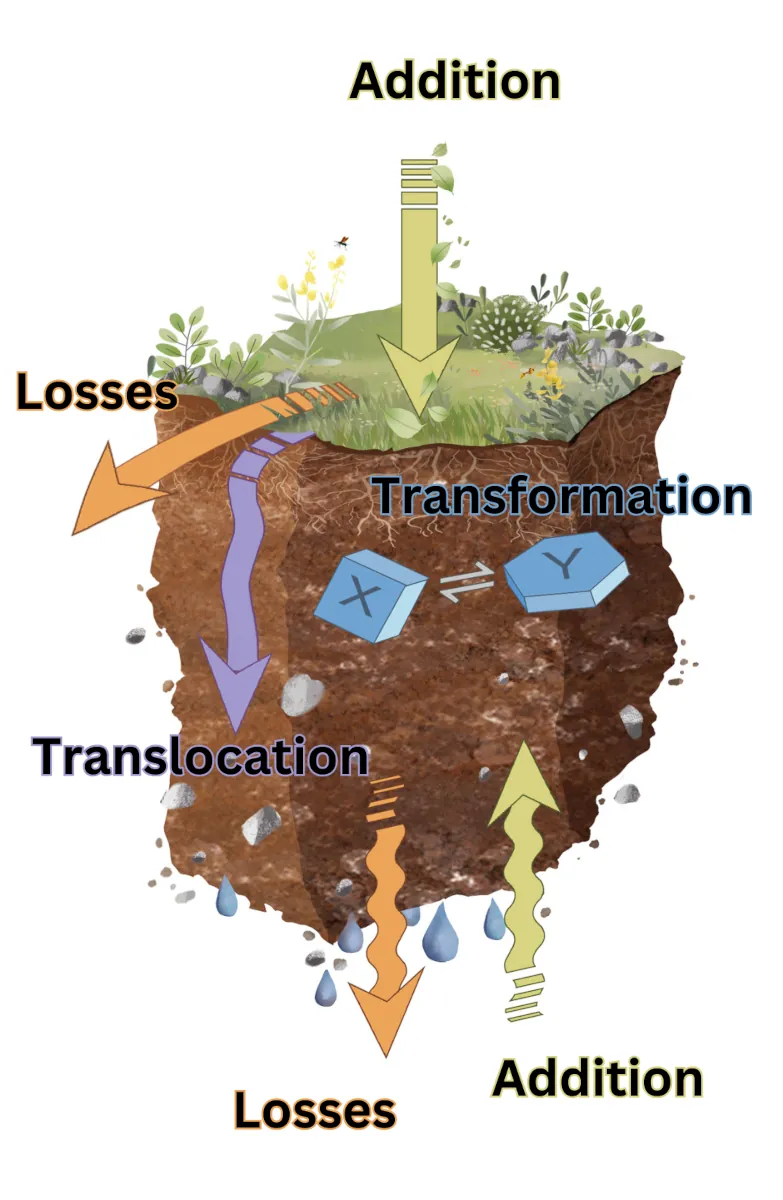
Addition is the process by which new material is added to the soil, such as the deposition of organic matter when leaf litter falls on the soil. Loss or removal is the process of removing material from the soil, for example the leaching or washing of salts, or the loss of particles through erosion. Translocation is the movement of material within the soil, either upwards or downwards, such as with the accumulation of clay, while transformation, as its name suggests, consists of chemical, physical or biological changes that soil materials undergo.
Both the formation factors and the pedogenic processes are perceptible through the different horizons (commonly called layers). The set of these horizons forms what we know as a soil profile.
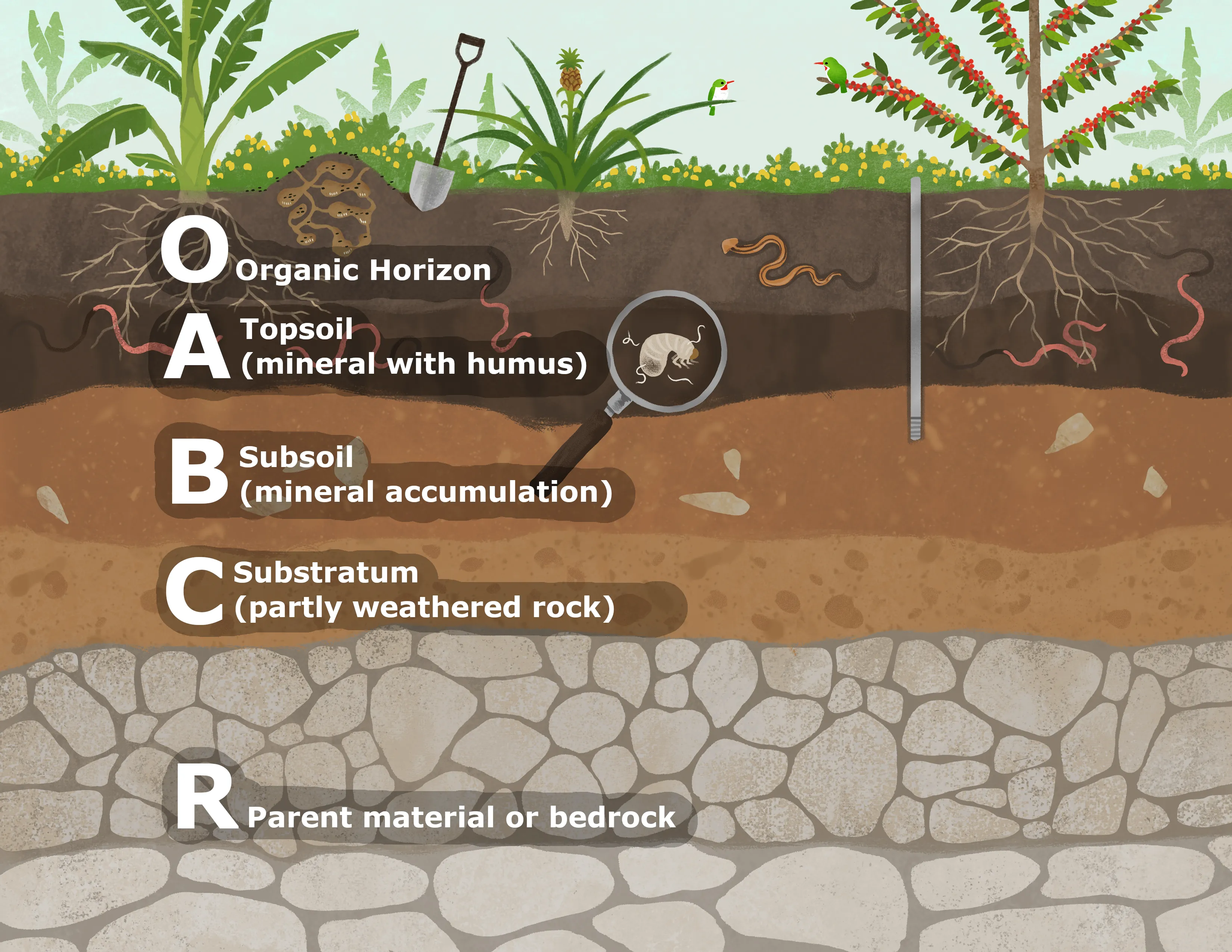
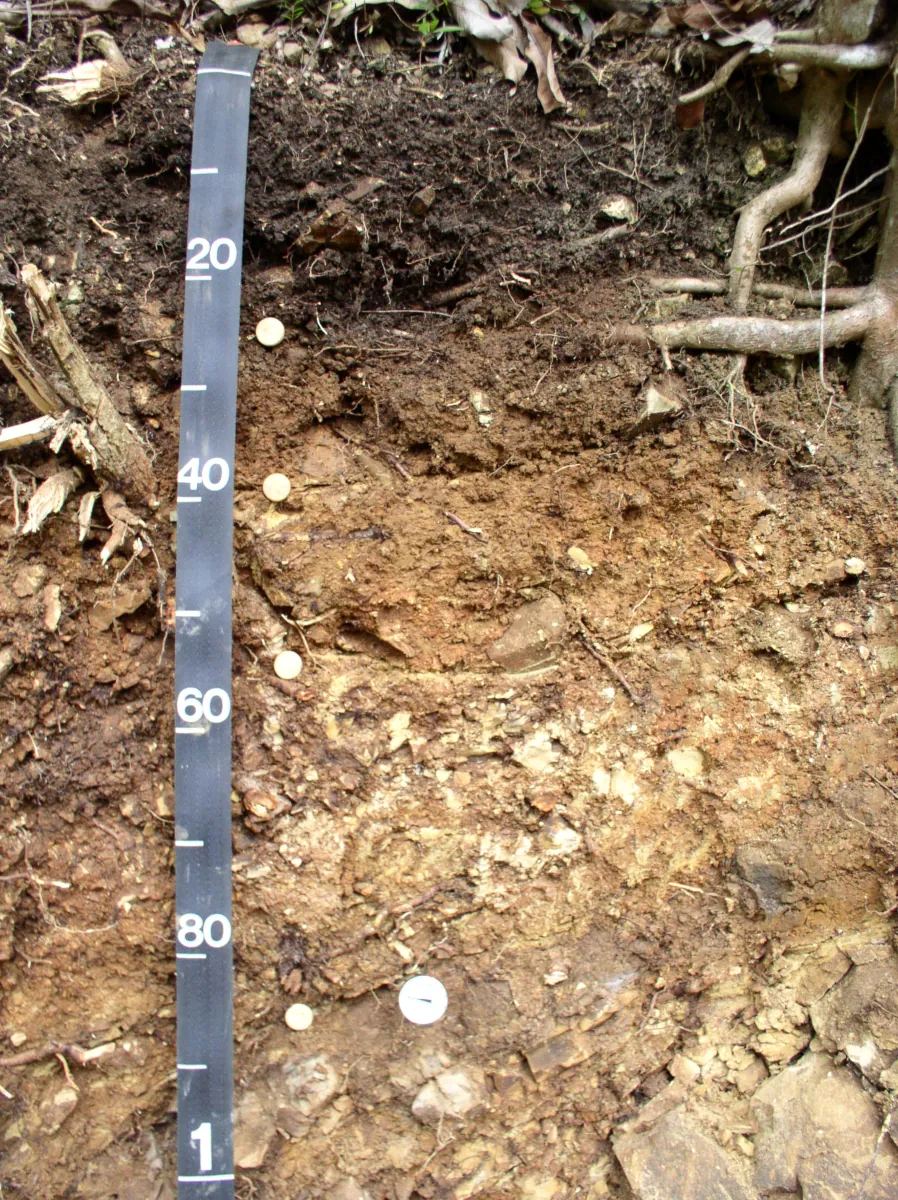
Can you discover the horizons?
Select image to reveal horizons
Soil profiles, in turn, allow to classify the diversity of soils into an organized system of hierarchy and taxonomy. There are various classification systems around the world. In Puerto Rico and the Virgin Islands of the United States, we use the Soil Classification Taxonomy System of the United States Department of Agriculture (USDA). The USDA soil taxonomy system is divided into the following six categories: order, suborder, large group, subgroup, family, and series. These categories range from the most general characteristics to more specific characteristics, allowing each soil to be classified by its specificity and set of unique properties.
The USDA soil classification system has twelve orders:
- Inceptisol
- Mollisol
- Ultisol
- Oxisol
- Vertisol
- Alfisol
- Entisol
- Aridisol
- Histosol
- Spodosol
- Andisol
- Gelisol
Although there are currently twelve soil orders, a new order has been considered to reflect the changes produced in soils at greater magnitudes due to human activity (Dazzi & Lo Papa, 2015; Weil & Brady, 2017).
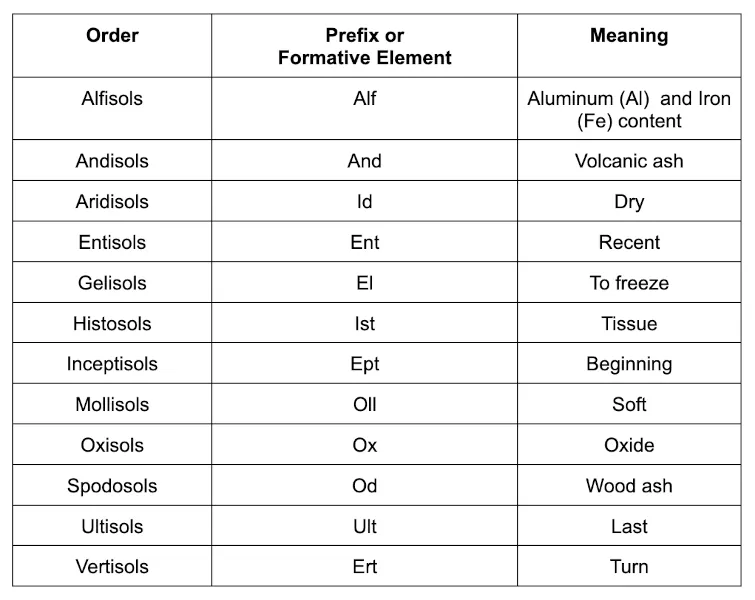
Formative elements in the soil order names. Muñoz et al., 2018.
You may be wondering why these names are assigned to soil orders. Soil orders group together those soils that share dominant physical, chemical, and biological properties, which allow one soil to be clearly distinguished from another. Soil order names are made up of elements that reflect key characteristics of soils. The suffix “-sol” is used for all order names and means “soil.” This suffix is combined with prefixes that indicate specific properties, such as degree of development, amount of organic matter, presence of specific layers, or biological activity, among other characteristics.
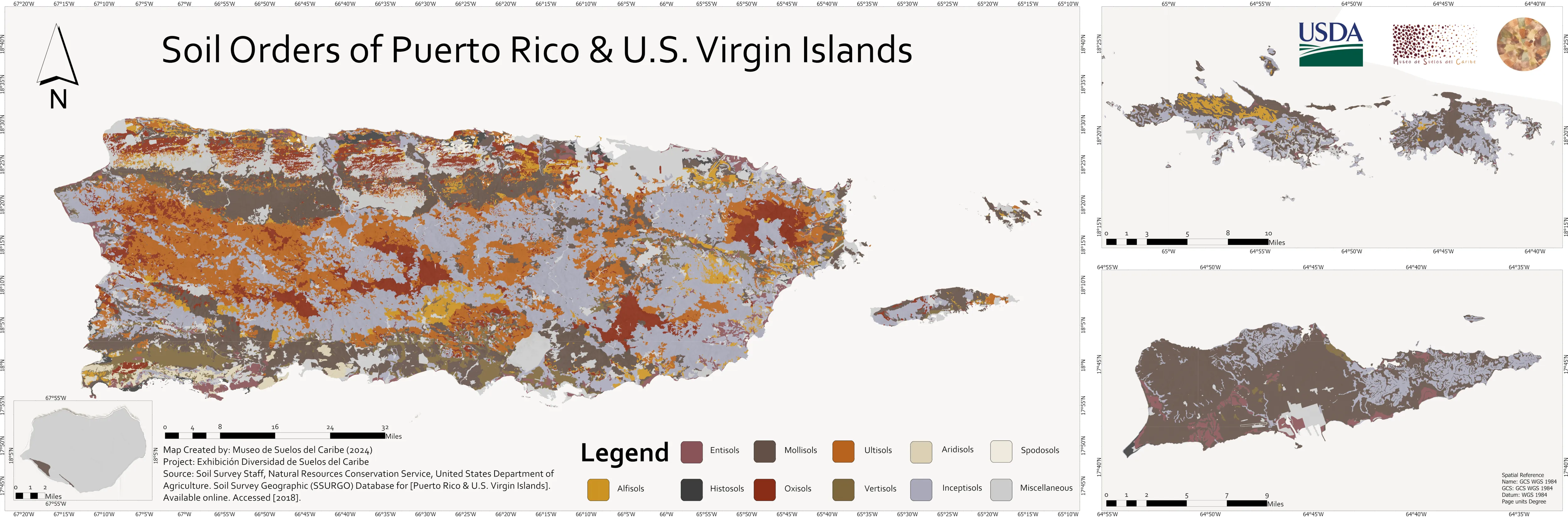
In Puerto Rico, we have ten of twelve soil orders present (Muñoz et al., 2018). This means that, even though it is an archipelago with a tropical designation, Puerto Rico has a great diversity of soils due to the number of microclimates and geological diversity. The soil orders that are present in Puerto Rico, considering their abundance (from highest to lowest) with the percent of abundance according to the land area, are: Inceptisols (29%), Ultisols (20%), Mollisols (15%), Oxisols (8%), Alfisols (5%), Vertisols (4%), Entisols (2%), Aridisols (2%), Histosols (0.5%) and Spodosols (0.2%) (González et al., 2020)
The Virgin Islands of the United States (Saint Thomas, Saint Croix and Saint John), located in the Caribbean, have five out of ten possible soil orders. The five orders are presented below with percent abundance by land area: Mollisols (63%), Inceptisols (25%), Alfisols (5%), Entisols (4%) and Vertisols (3%) (González et al., 2020)
Below we include photographs of soil profiles with brief information about the soil orders present in Puerto Rico and the Virgin Islands of the United States.
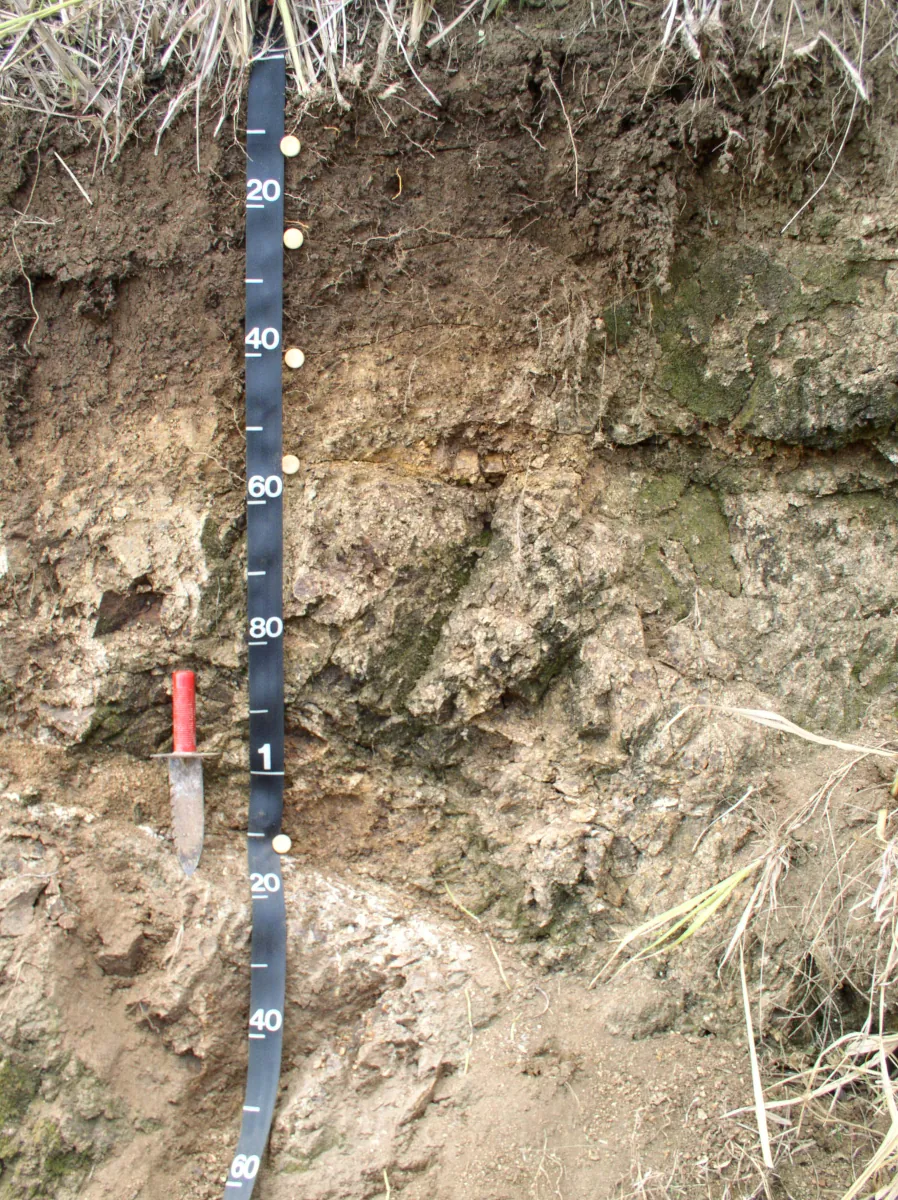
Soil profile, Inceptisol order, Rubias series. © Samuel Ríos Tirado, USDA-NRCS
Soil profile, Inceptisol order, Callabo series. © Samuel Ríos Tirado, USDA-NRCS
Inceptisol order soils are soils that are in moderate soil development. It is the most abundant soil in Puerto Rico, found in mountainous regions and their slopes. Soils of this order are extremely susceptible to erosion due to their position in the landscape.
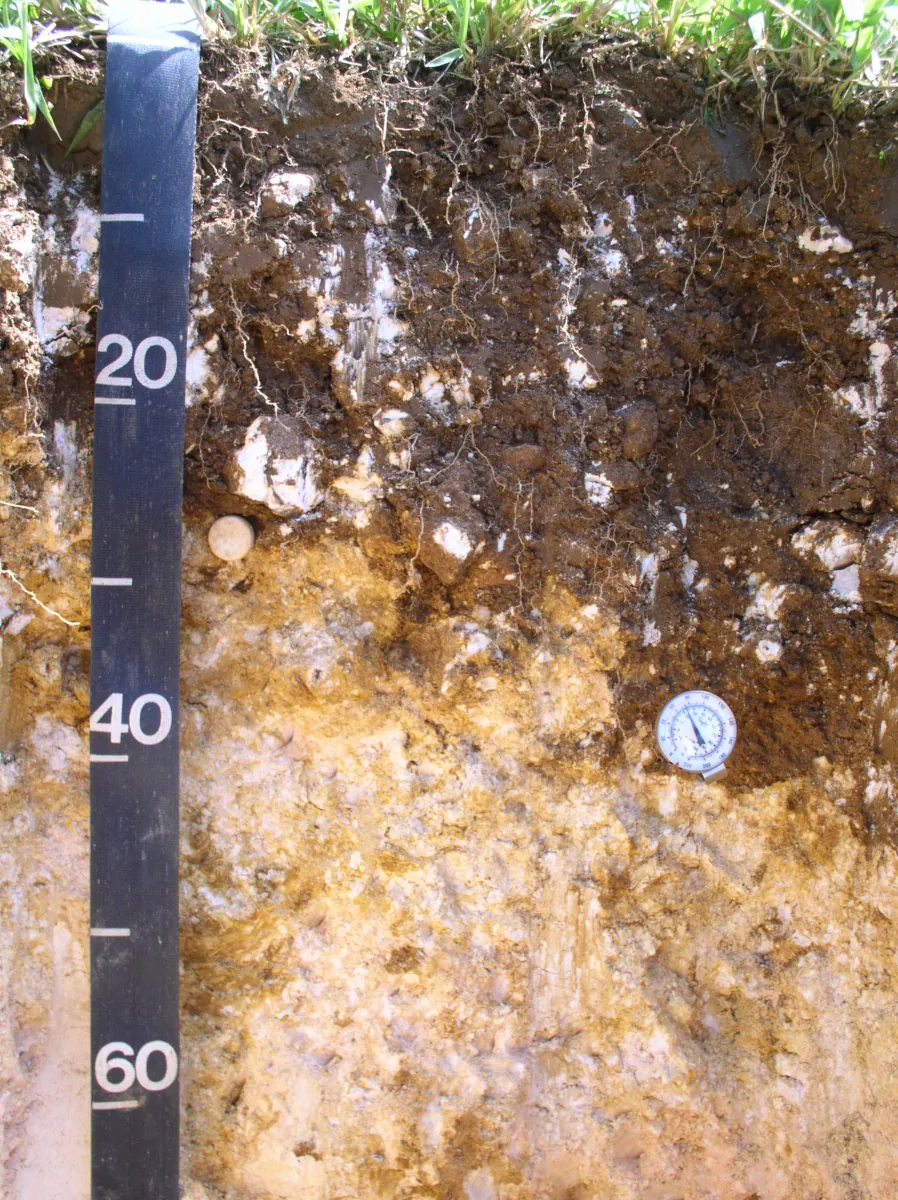
Soil profile, Molisol order, Soller series. © Samuel Ríos Tirado, USDA-NRCS
Molisol soils are considered the best agricultural soils. These soils are characterized by being deep and having a high amount of organic matter, which in turn provides the capacity for a good balance in drainage and moisture retention.
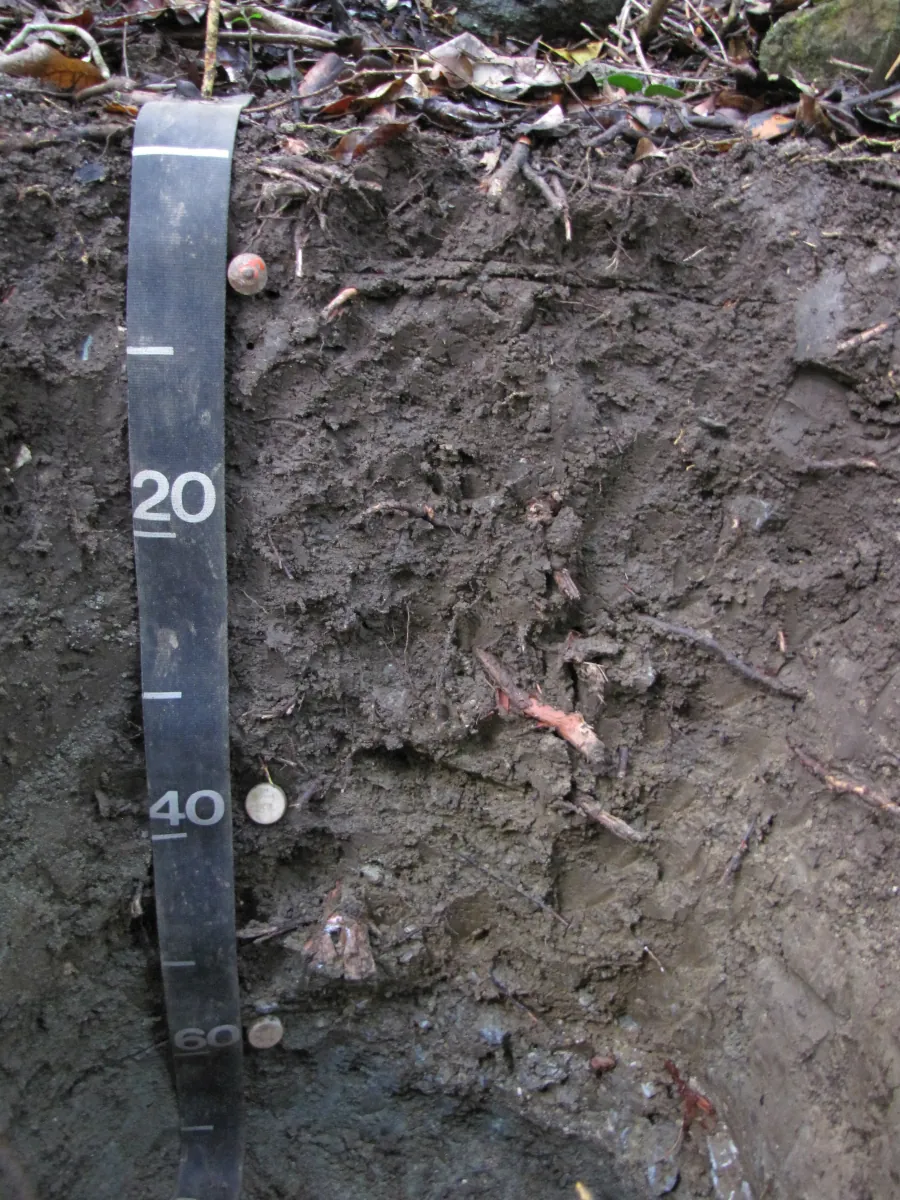
Soil profile in the U.S. Virgin Islands, Molisol order, Susannaberg series. © Samuel Ríos Tirado, USDA-NRCS
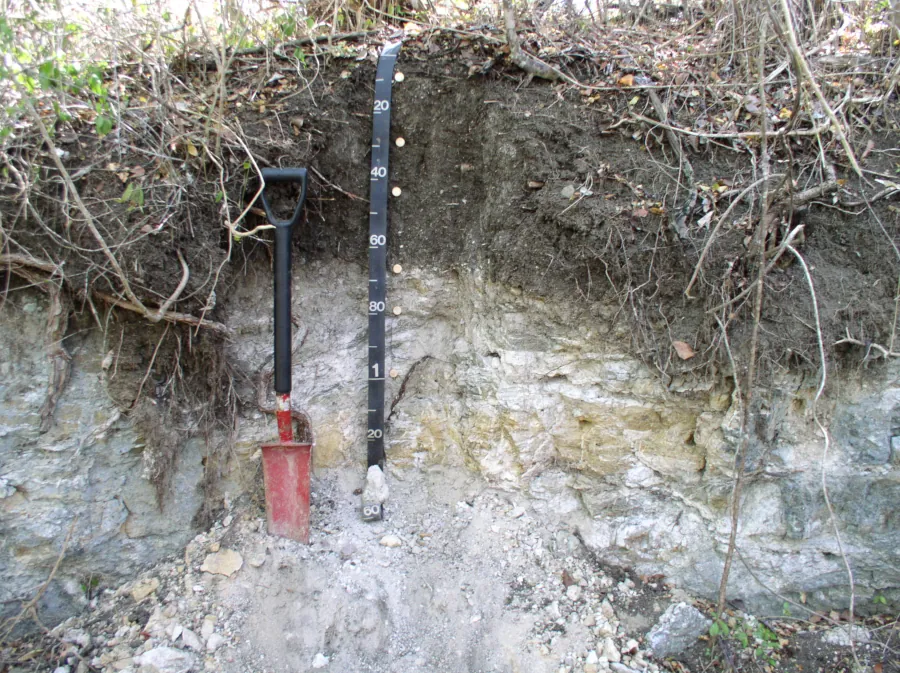
Soil profile, Molisol order, Aguilita series. © Samuel Ríos Tirado, USDA-NRCS
The organic matter content can be observed in the dark brown colors of Mollisols. They are found in the valleys and coastal areas of Puerto Rico and are the predominant soil order in the Virgin Islands of the United States. Due to their natural fertility, they are commonly used for the production of vegetables and fruits.
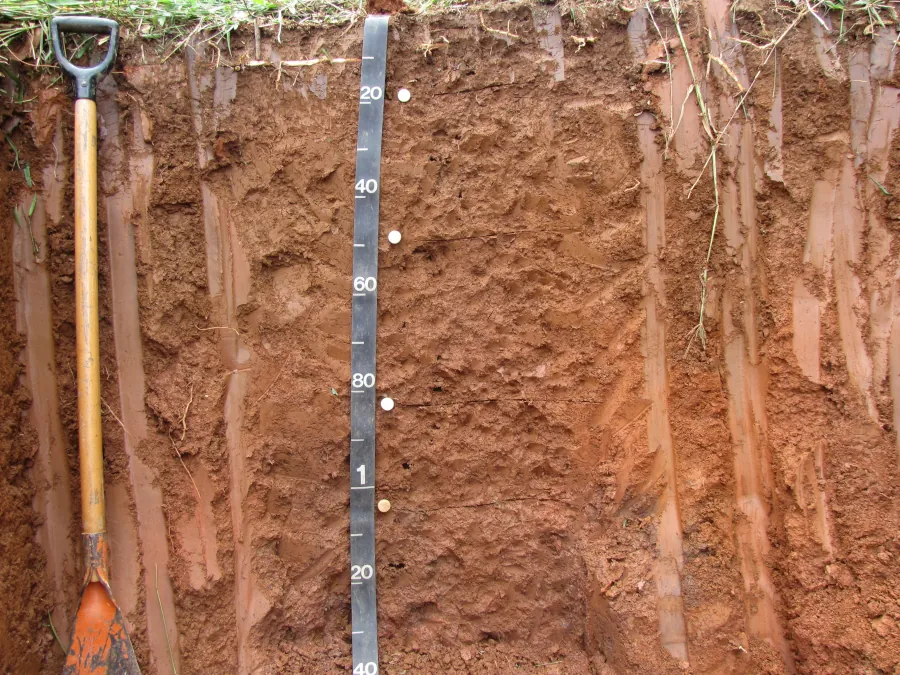
Soil profile, Ultisol order, Humatas series. © Samuel Ríos Tirado, USDA-NRCS
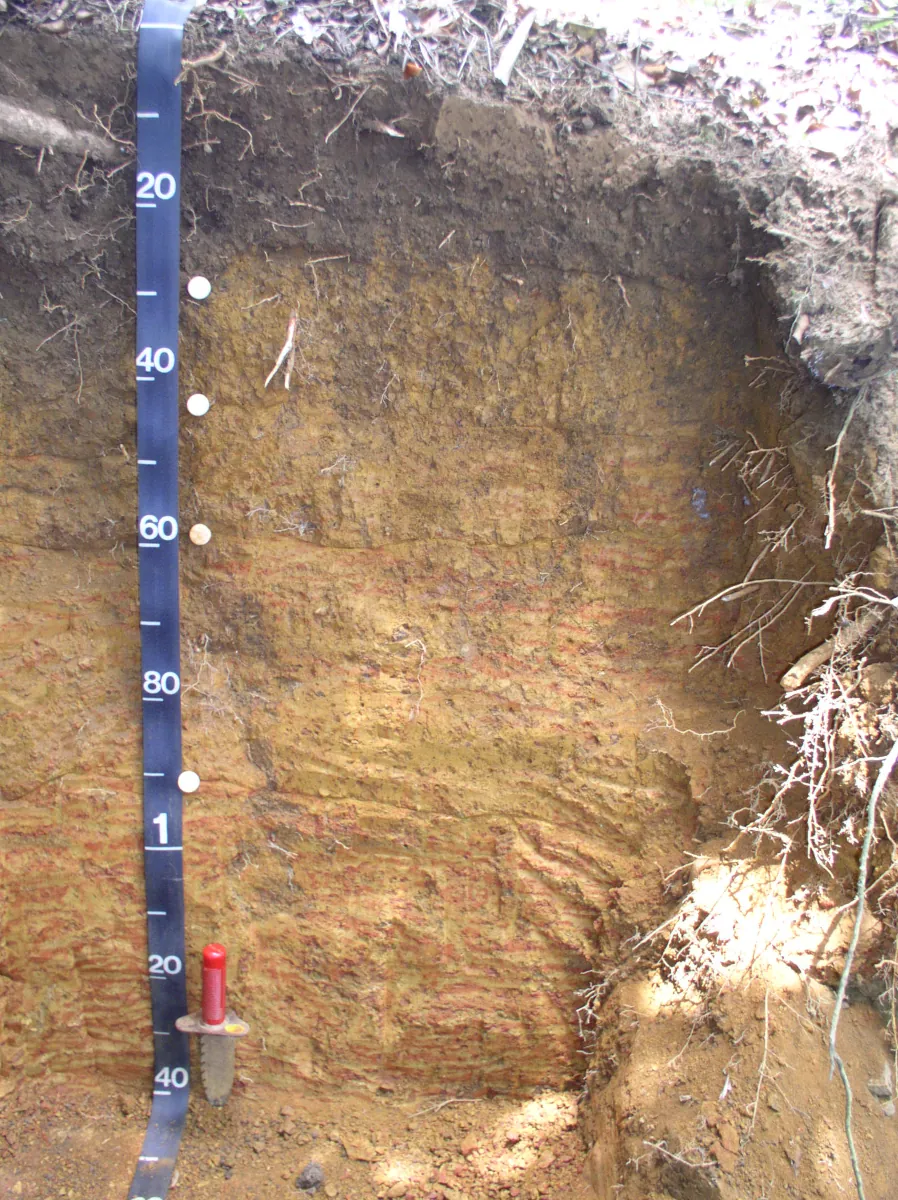
Soil profile, Ultisol order, Guanajibo series. © Samuel Ríos Tirado, USDA-NRCS
Ultisol soils are known as old soils because they are highly weathered. Ultisols have a high amount of clay and are characteristic of humid mountainous areas of Puerto Rico. Most Ultisol soils require management practices to correct acidity problems and increase agricultural productivity. Among the management practices is liming, which consists of incorporating an alkalizing material such as calcium or magnesium into the soil. Ultisol soils are used for grazing and crops tolerant to low pH such as yams and coffee.
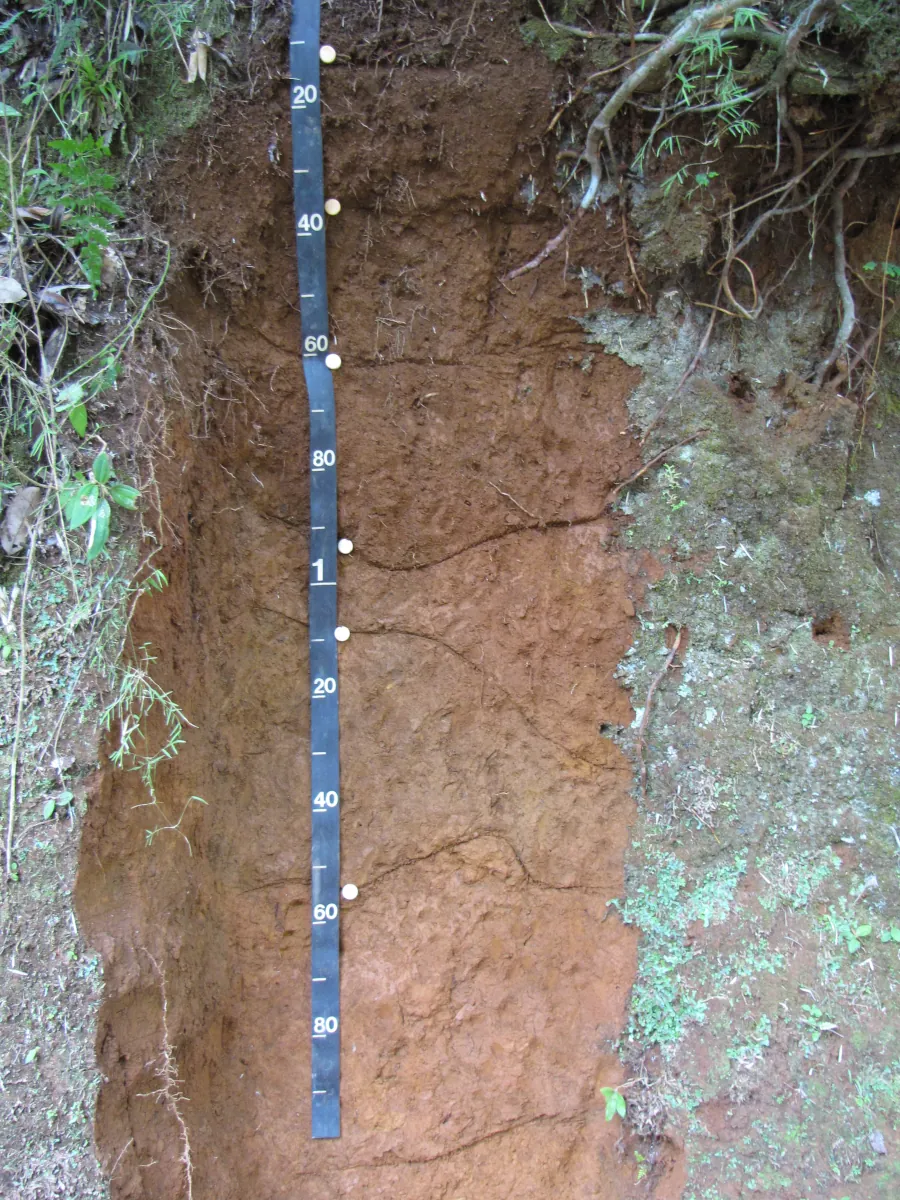
Soil profile, Oxisol order, Cerro Gordo series. © Samuel Ríos Tirado, USDA-NRCS
Oxisols are known as red and tropical soils. These soil types are unique to tropical areas, and represent the later stages of soil development. This is why they are found on stable surfaces, and are mostly used for pineapple, starch-rich crops, and coffee production. Oxisols are soils with an acidic pH, and usually poor water drainage. These soil types contain highly weathered minerals, for example hematite and goethite, which are oxides of iron and aluminum.
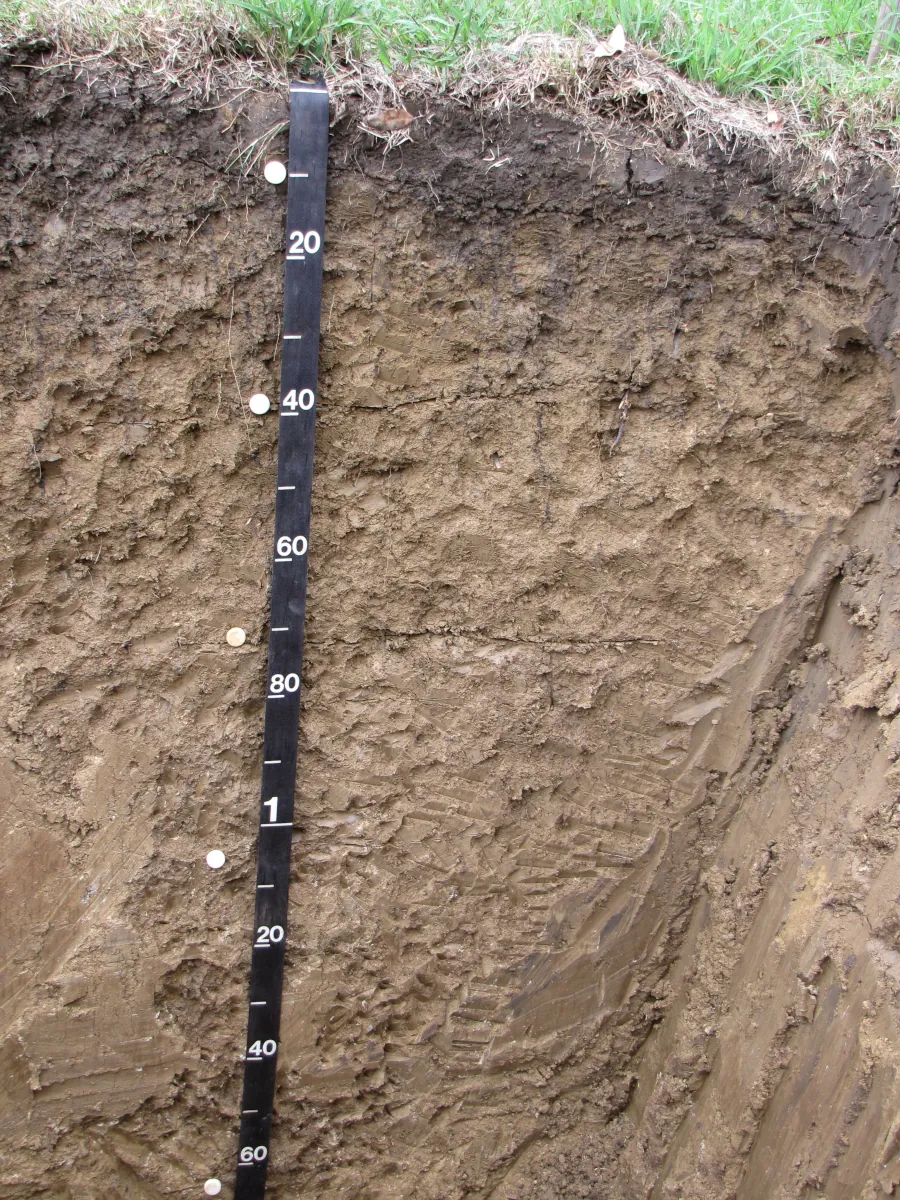
Soil profile, Vertisol order, Fraternidad series. © Samuel Ríos Tirado, USDA-NRCS
The Vertisol soil order is known as the “shrinking and expanding soil” due to its high content of smectite-type clay. When these soils are exposed to water, their clays expand, while in the absence of moisture, the clays shrink, reflected in the soil with cracks and cavities. This behavior of clays generates a physical movement in the soil similar to pouring or turning, from which the name of the order comes: Vertisol. Records indicate that these types of soils are located in subhumid and semiarid areas, predominating on the southern coast of Puerto Rico and southwest of Saint Croix. In general, these soils are used for grazing, fruit and vegetable production.
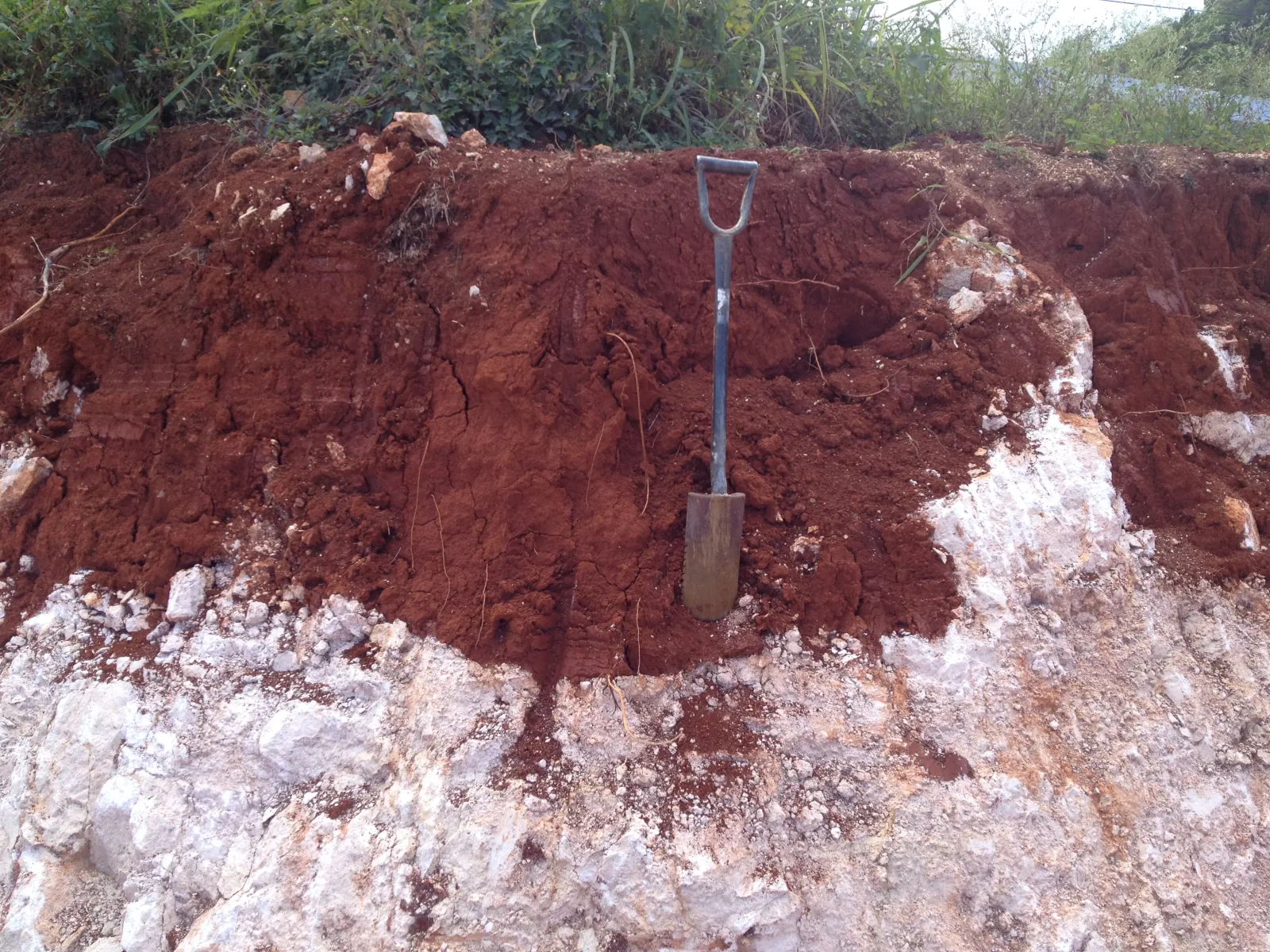
Soil profile, Alfisol order, Tanamá series. © Samuel Ríos Tirado, USDA-NRCS
Soils of the Alfisol order are found mainly in the limestone zone of northwestern Puerto Rico, northern Saint Thomas and small fractions of Saint Croix. These types of soils are characterized by having an argillic horizon, that is, with an accumulation of clays. These are soils with high base saturation, considered fertile soils, rich in nutrients such as calcium and potassium. In addition, they are found in high humidity regimes that favor agricultural production.
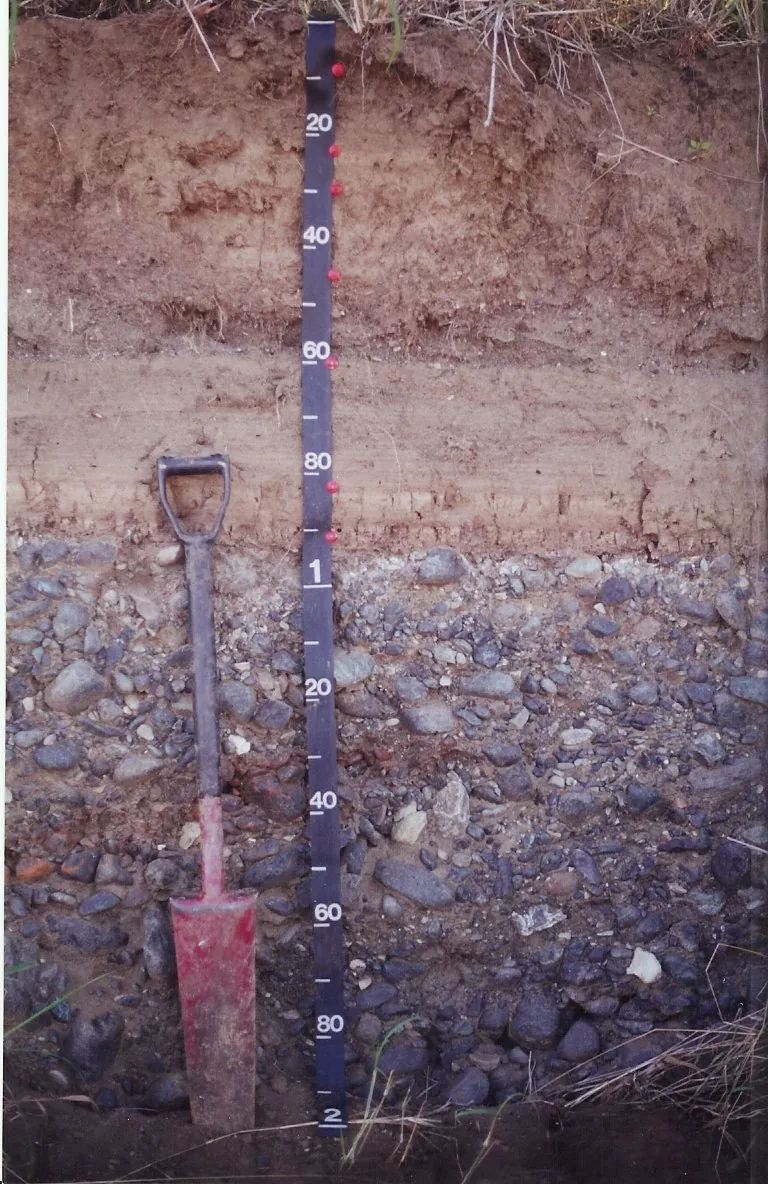
Soil profile, Entisol order, Reilly series. © Samuel Ríos Tirado, USDA-NRCS
Soils of the Entisol order are young soils, without marked horizons and little development. Therefore, they have a high rock content and are shallow. Entisols can be very variable in terms of their properties. In Puerto Rico, these soils are found in recent deposits along streams, in coastal alluvial plains or on steep slopes where active erosion prevails.
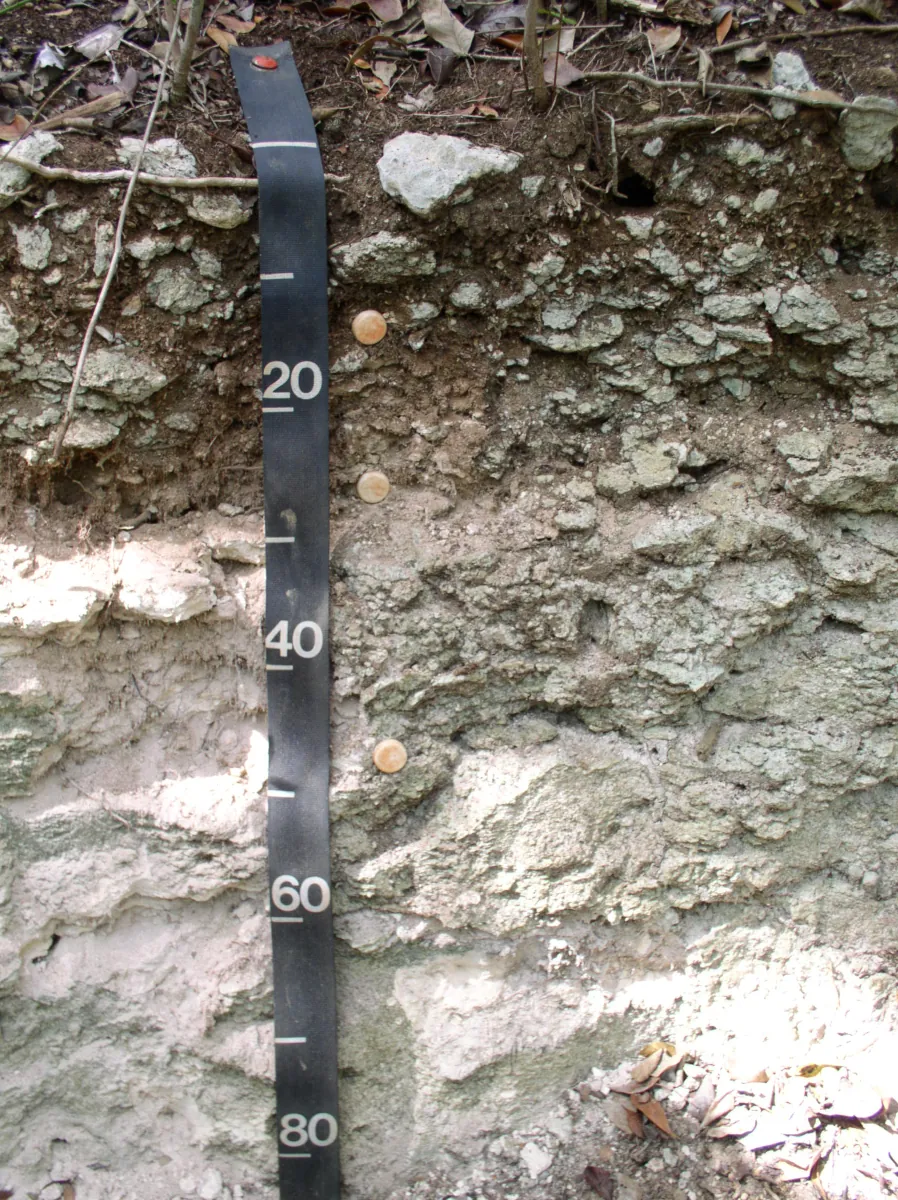
Soil profile, Aridisol order, La Covana series. © Samuel Ríos Tirado, USDA-NRCS
Aridisol soils are, as their name indicates, arid soils with little moisture. They are found in the southwestern coastal region of Puerto Rico. Since they receive little rainfall throughout the year, these soils have little or moderate development. They are also characterized by having very little organic matter, high sand content, and poor water retention capacity. In general, these soils are efficiently used for hay and pasture production.
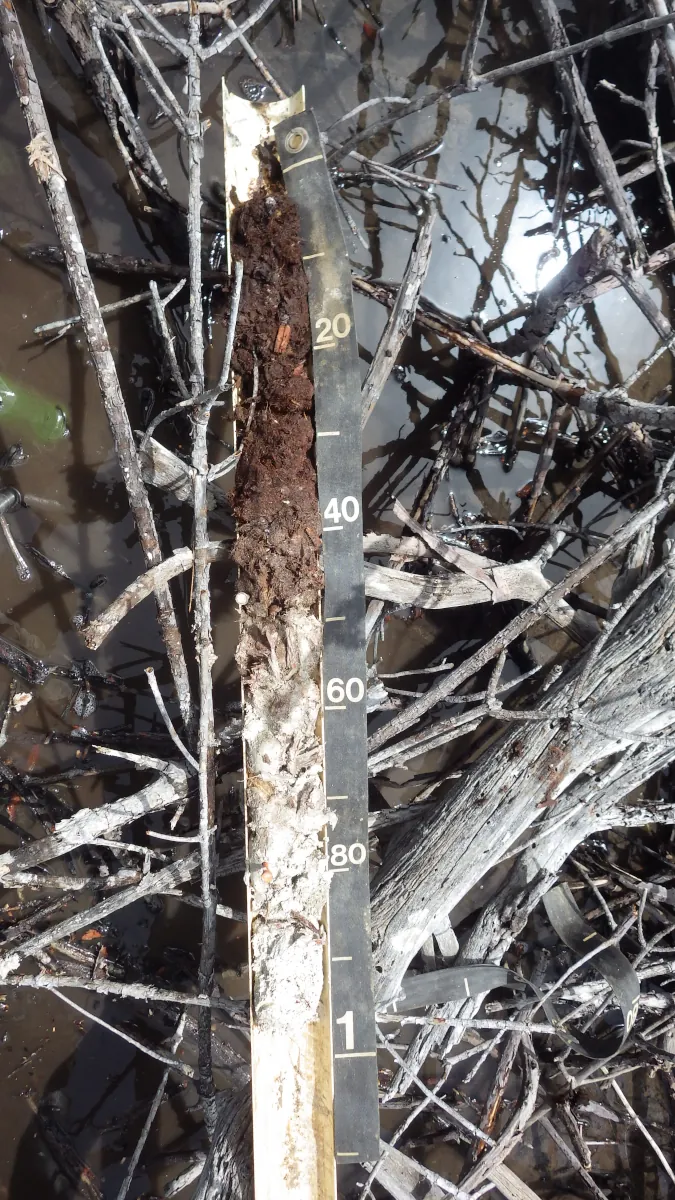
A soil profile submerged in water, Histosol order, Manglillo series. © Samuel Ríos Tirado, USDA-NRCS
Histosol soils are soils composed mostly of organic matter such as leaves, mosses, and grasses that accumulate and decompose slowly over time. Because of this, they are carbon-rich soils and are considered very important carbon reservoirs. Most of these soils are saturated throughout the year. In Puerto Rico, Histosols are found along the coast, mainly in association with mangroves, swamps, and lagoons. In the past, drainage management practices were applied to many soils of this order to adapt them to crops, such as sugar cane production. It is important to recognize that this soil is different from the compost obtained in gardens, since Histosol soils are formed by the formation processes, have an acidic pH, and lack other nutrients such as nitrogen, phosphorus, and potassium.
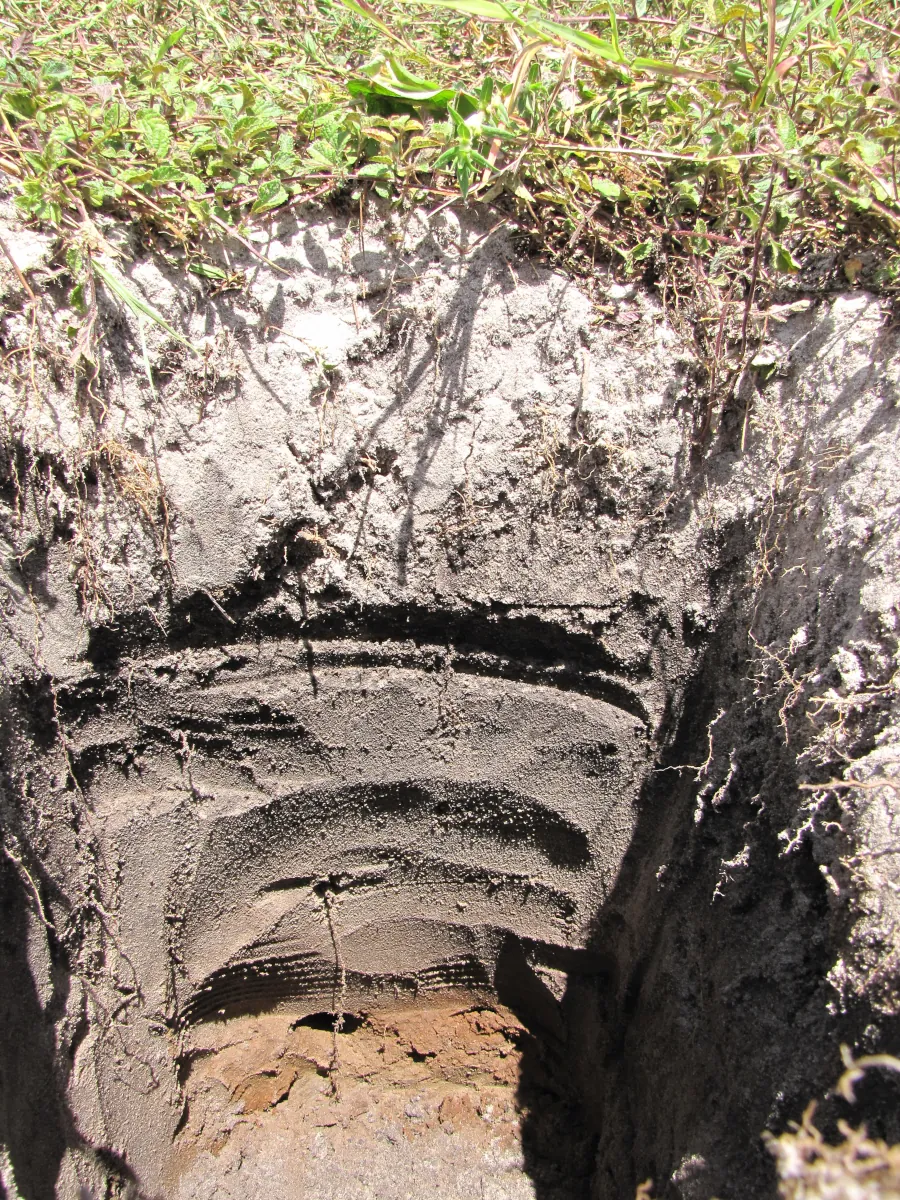
Soil profile, Spodosol order, Corozo series. © Samuel Ríos Tirado, USDA-NRCS
Spodosol soils are soils that have an eluviation zone. Eluviation is a process of physical movement or transport of insoluble soil particles in water, from the upper horizons of the soil to the lower horizons. This results in a characteristic horizon, rich in sand and minimal presence of clay and organic matter. These soils tend to have an acidic pH, low fertility and low clay concentration. Therefore, these soils are used for industrial sand extraction. In general, these types of soils can be found in secondary forests, in areas of native grass, coconut production or in scrublands.
TEXT:
Yomaries González Bermúdez
All Rights Reserved ©2024 Arte Suelo Ser / Soils Museum of the Caribbean - Imagined from the lands of the Caribbean