Pulse
the Electrical Conductivity of Soil
Imagine soil as a miniature ecosystem, a microscopic world full of life and essential nutrients for plants. Soil electrical conductivity acts like an echo that tells us how this internal system is functioning. But what does it really mean?
Imagine rubbing a balloon on your head for a while; when you pull it away and bring it back close to your hair, it stands up in a funny way. Similarly, you've probably touched something metallic before, like a door handle or a car door, and felt a spark or shock when touching another person.
A Look at moving ions
Soil electrical conductivity refers to its ability to transmit electrical current. How is electrical conductivity related to soil health? The answer is surprising! Healthy soils, with proper structure and content, have a higher ability to conduct electricity. This is due to the presence of charged ions in the water within the soil.
When the water in the soil contains various ions, each of them has a positive or negative charge. For example, potassium, calcium, magnesium, and sodium are positively charged ions and can move freely through water. By applying a small electrical current to the soil, these ions act as electric messengers, transmitting the current and generating data that reveals crucial information about the soil. For instance, if soil contains a lot of sodium ions, their positive charge requires special management because plants struggle to grow healthily in such conditions.
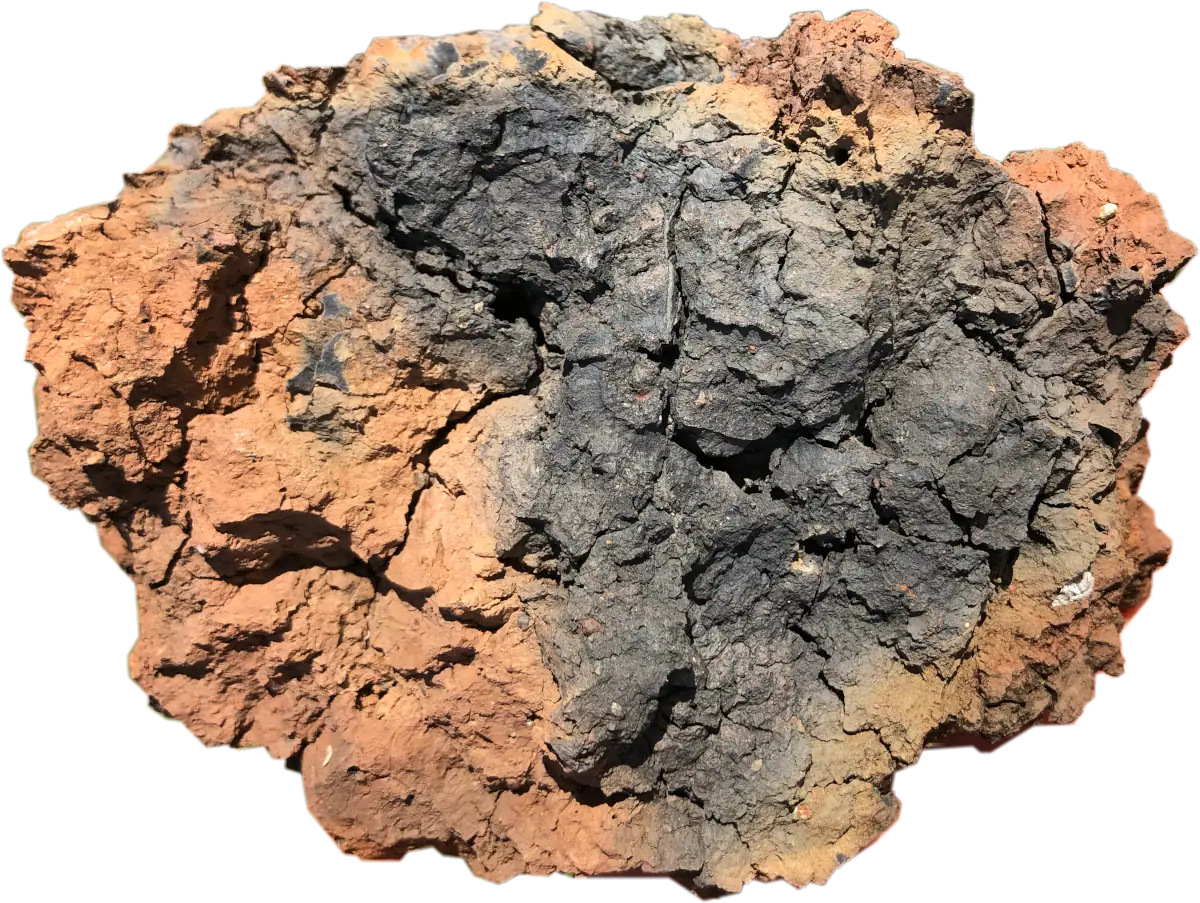
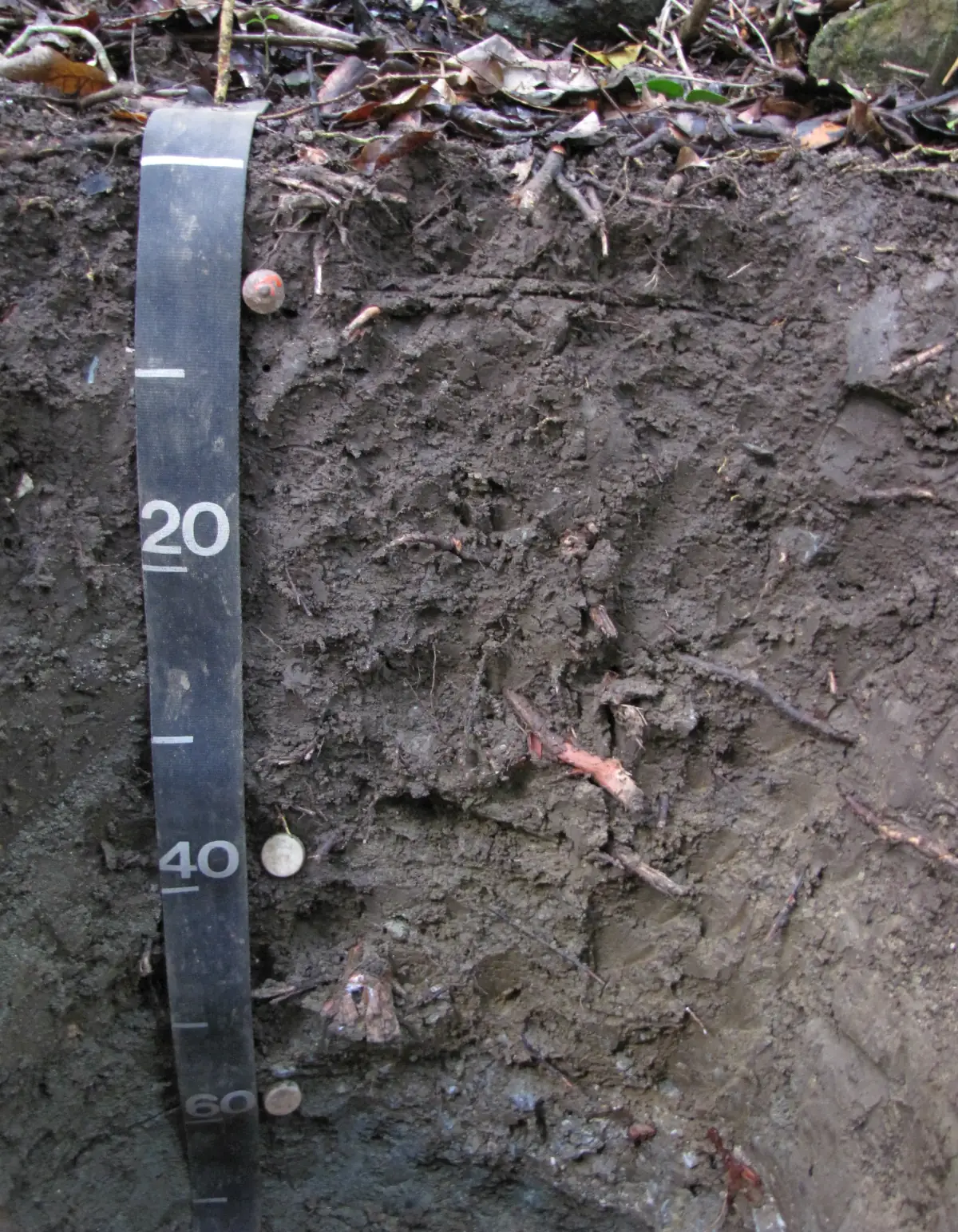
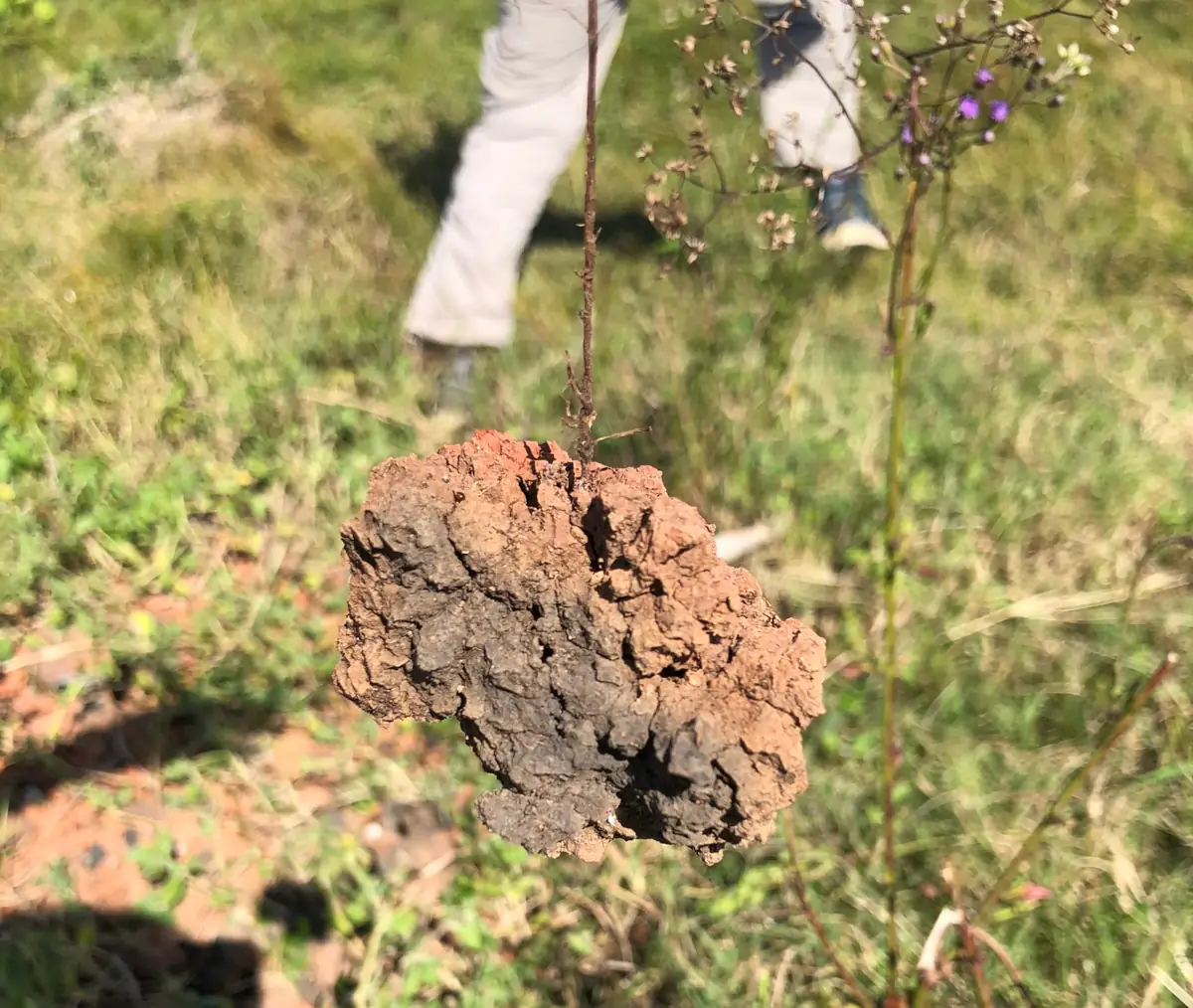
In this photograph, you can see a clod of soil collected from an area near high livestock activity, where the soil has lost its physical structure due to water and air pressure. This soil has sodic characteristics. The colors are believed to result from acidic conditions caused by the decomposition of organic matter in areas occasionally affected by wastewater flooding.
If the soil is affected by wastewater with high salt content, such as sodium, the electrical conductivity of the soil may increase. This happens because the dissolved salts in the water act as electrolytes, facilitating the flow of electrical current through the soil. Therefore, if soil adjacent to sodic areas is affected by wastewater with high salt content, it is likely to have higher electrical conductivity.
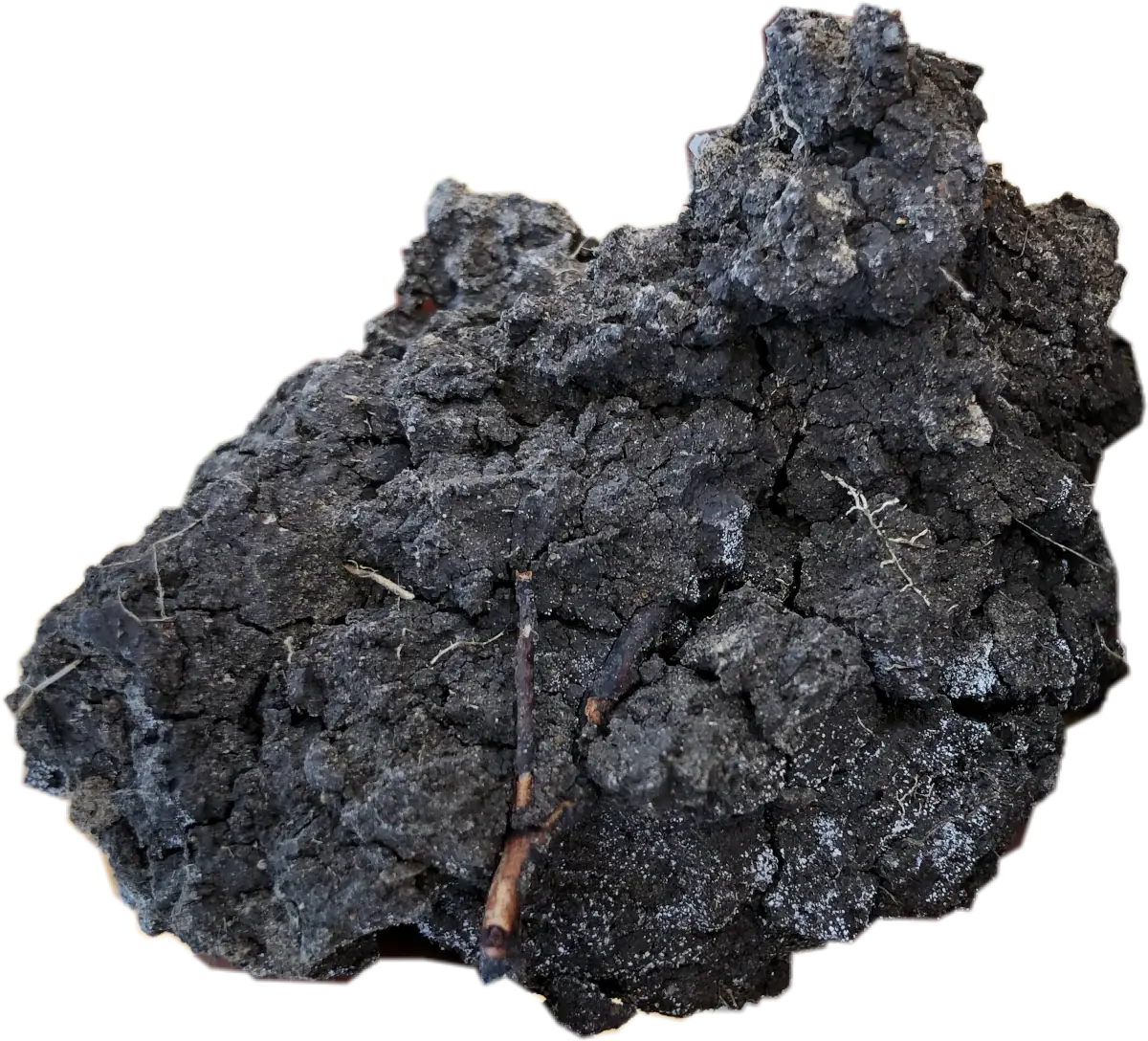
Saline soil aggregate obtained from a farm where artesian pressures promote the rise of salts, such as sodium chloride and carbonates, to the surface of the soil profile.
The Effect of Electrical Conductivity on Soil Coherence
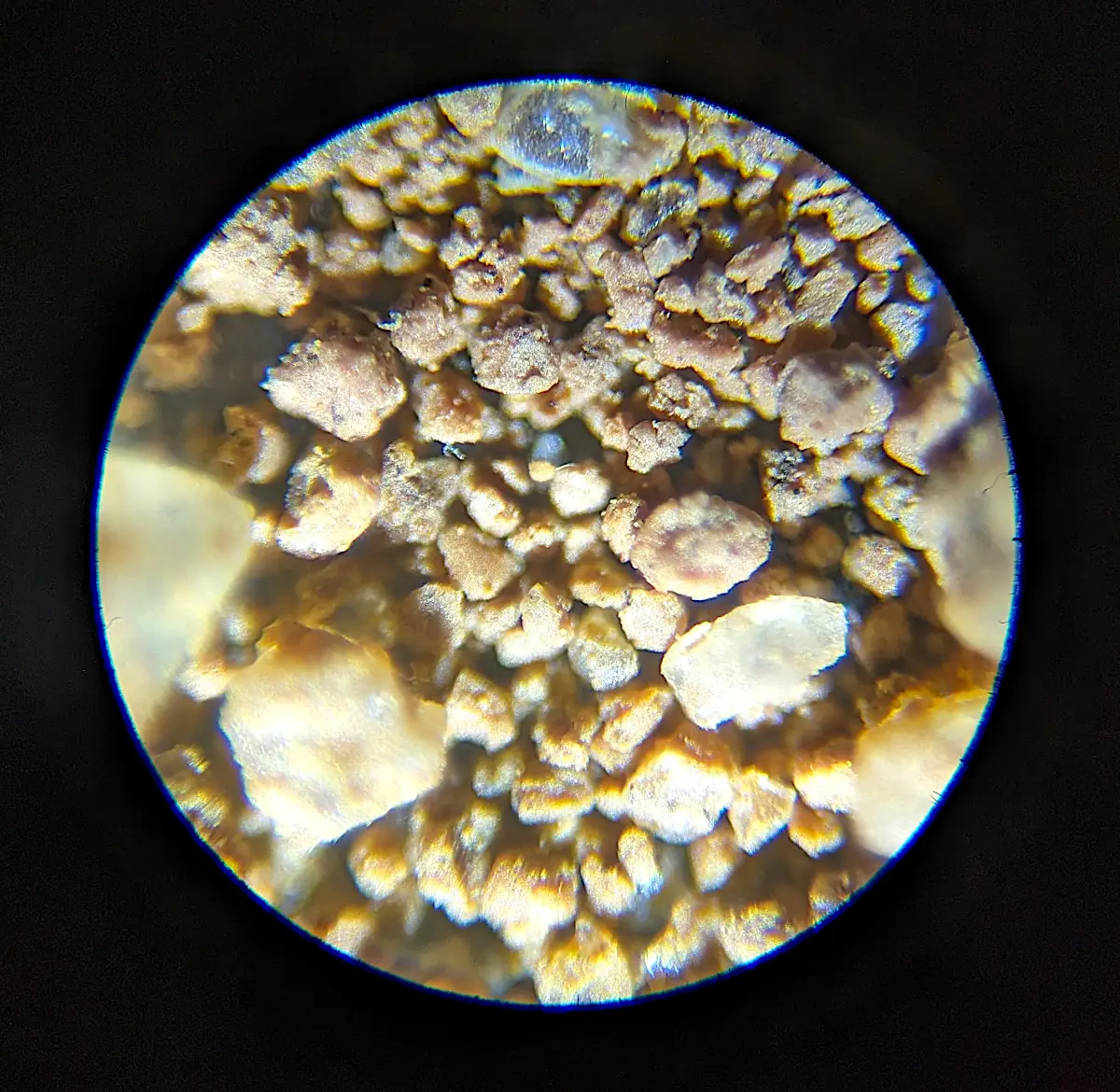
Imagine holding a handful of sand. If the electrical conductivity is sufficient, the soil particles stay together, similar to how a magnet attracts metal objects. However, if the conductivity is very low, the particles aren’t as bound and can scatter easily, like separating puzzle pieces.
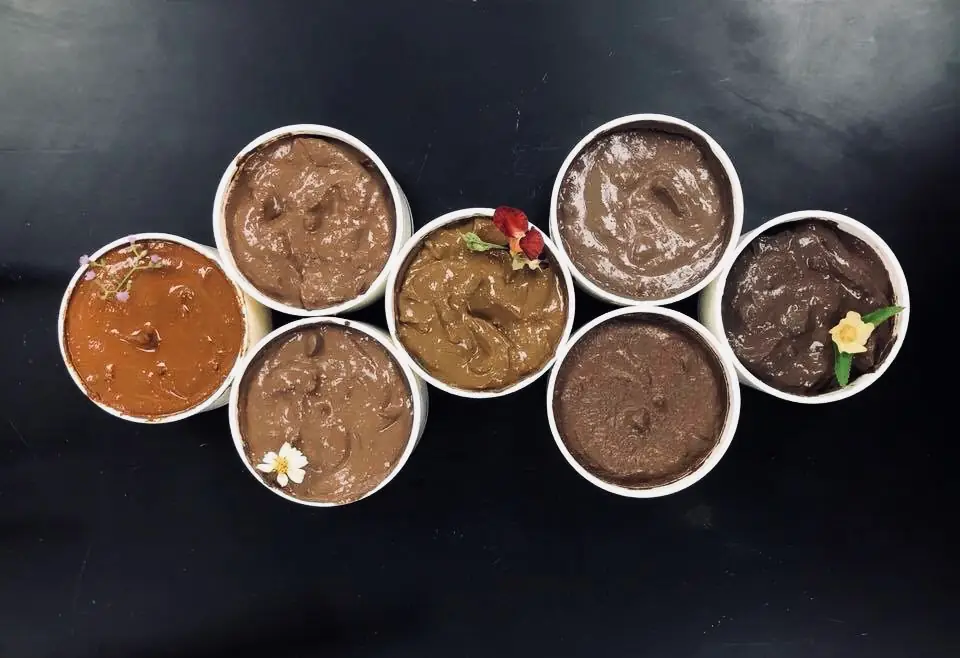
In the photograph, you can observe the soil sample's appearance after completing the filtration process of a saturated soil paste extract. This extraction method measures parameters related to soil salinity, such as electrical conductivity (EC), pH, and sodium adsorption ratio (SAR). EC is expressed in Siemens per meter (S/m) in the International System of Units.
Fluctuations in Electrical Conductivity, the Pulse
Soil electrical conductivity becomes a key parameter to evaluate soil and infer its behavior. Each measurement provides clues about soil quality, its capacity to sustain plant life, and its role in the Earth's life cycle.
In some cases, soil electrical conductivity measurements can fluctuate in response to changes in soil moisture, salinity, texture, and other environmental factors. These fluctuations can occur rapidly, much like a "pulse" in soil conductivity.
So, the next time you walk through a field or observe your garden, remember that beneath your feet lies a complex system where electrical conductivity helps us better understand and care for the soil that sustains life.
TEXT:
Beverly Álvarez Torres
EDITED BY:
Leidy J. Fernández Montiel
PHOTOGRAPHY:
Beverly Álvarez Torres
Samuel Ríos Tirado (Perfil de Suelo), USDA-NRCS
Anaís Pasarell Mair (Microscopio)
All Rights Reserved ©2024 Arte Suelo Ser / Soils Museum of the Caribbean - Imagined from the lands of the Caribbean